

Within the UK, the Government has launched the Energy Company Obligation (ECO) scheme that aims to reduce homeowner’s energy bills whilst tackling carbon footprint reduction targets. Funding is available for you and eco-energy installers to take full advantage of, we want to discuss an energy-saving measure at the forefront of the scheme, something almost everyone can benefit from and is a no-brainer when it comes to saving you money.
Homeowners, landlords and tenants have access to pots of funding to help cover the costs of energy-efficient improvements, those on specific benefits and those who are on low income will benefit from the scheme due to wanting to make the scheme accessible to all.
In this post, we’ll provide an all-encompassing rundown of loft insulation, why you need it, the benefits it will bring, and exactly how you go about getting yourselves approved.
What is loft insulation?
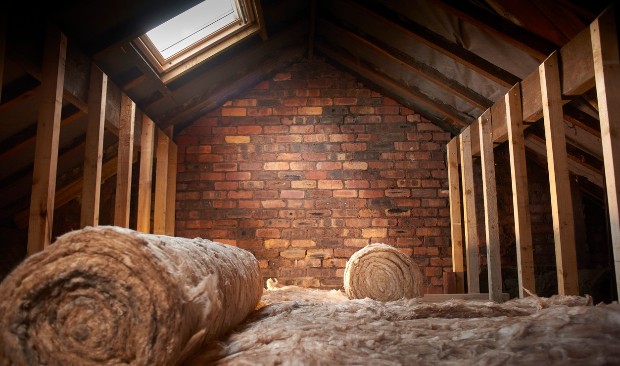
Loft insulation, simply put, is a little like a woolley hat for your house. Mineral wool material is rolled between the beams in an attic space, however must be done with great precaution.
The space will require the protection of any electrical wires and water tanks, installation of ventilation gaps, and also the covering of downlights to prevent any fire hazards – a little more complex than first anticipated, and that’s without the discussion of storage systems.
Nonetheless, you won’t have to worry as we can take care of all this for you.
Why Does it Matter?
Loft insulation essentially traps the rising heat that looks to leave your home, a quarter of the heat you pay for is lost through the roof in an uninsulated home. The less heat that leaves your home, the less fuel you have to pay for, simple. You aren’t just saving money every year either, you will actually be assisting in the UK’s carbon reduction goals, helping create a greener tomorrow – it really is a no-brainer.
Now let’s get into the figures.
Insulation lasts for up to forty years and pays for itself many times over.

Where it does depend on the property, the size of the loft space, and also if any pre-existing insulation is there, an average loft insulation job costs around nine hundred pounds to install, but wait!
As per the diagram chart above, you will see an average you could save on annual energy bills by having 270mm of loft insulation installed.
Within just two years you will have paid the measure off (if you have to put anything towards it yourself) and can further reap the benefits over the next few decades. It is evident loft insulation is worthwhile, for all parties involved, it is therefore our mission to make you aware of this.
We’re here to tell you, it’s not too good to be true!
The steps you will need to take are:
Find out whether your loft space needs insulation.
Is there any pre-existing roll in there? When was it last insulated? Is it accessible?
- Find a local, trust mark approved eco-energy company, such as RMS Energy Ltd, and get booked in for a survey!
- Once the survey looks good we can then look at getting you booked in for install.
- An installation date is booked! Payment of your contribution, if any, is paid upon completion of the work.
- Leave the rest to us and enjoy your warmer home.
Let’s talk about eligibility
Under the new scheme, homeowners, tenants and landlords in England, can get insulation up to completely free if the right criteria is met.
A customer can qualify either through being on any of the benefits listed below
Benefits include:
- Income Support
- Income-Based Jobseeker’s Allowance (JSA)
- Income-Based Employment and Support Allowance (ESA)
- Universal Credit
- Pension Guarantee Credit (excluding Pension Savings Credit)
- Child Tax Credit
- Working Tax Credit
- Disability Living Allowance
- Personal Independence Payment (PIP)
- Attendance Allowance
- Carer’s Allowance
- Severe Disablement Allowance
- Industrial Injuries Disablement Benefits
- Contribution-Based Jobseeker’s Allowance (JSA)
- Contribution-Based Employment and Support Allowance (ESA)
- Housing Benefit
Or can go through the FLEX process, specific areas have different criteria that need to be met. This can be dependent on annual income and also any underlying health conditions.
Get in touch too see if we can qualify you!